
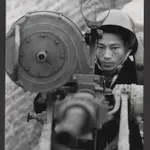
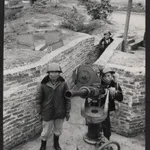
 A militia man behind anti-aircraft gun outside a factory in Haiphong, North Vietnam, 1967. Gun is of American make and factory officials said it had been captured from the French at Dien Bien Phu. (watermarks do not appear on the actual photograph.)
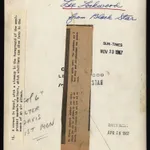
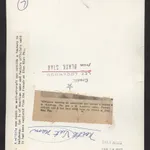
 A militia man behind anti-aircraft gun outside a factory in Haiphong, North Vietnam, 1967. Gun is of American make and factory officials said it had been captured from the French at Dien Bien Phu. (verso)
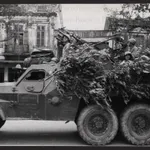
 “Camouflage in Motion — Anti-Aircraft Truck, Hanoi, 1967" (watermarks do not appear on the actual photograph.)
 “Camouflage in Motion — Anti-Aircraft Truck, Hanoi, 1967"(verso)
 “Elevated Vigilance — Anti-Aircraft Tower Haiphong, North Vietnam, 1967.” (watermarks do not appear on the actual photograph.)
 “Elevated Vigilance — Anti-Aircraft Tower Haiphong, North Vietnam, 1967.” (verso)
 “Re-Evacuation — Children Leaving Hanoi After Tet Holiday, Hanoi Vietnam, 1967.” (watermarks do not appear on the actual photograph.)
 “Re-Evacuation — Children Leaving Hanoi After Tet Holiday, Hanoi Vietnam, 1967.” (verso)
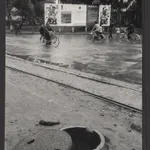
 “Hidden Beneath the Street — Hanoi Manhole Shelters, 1967.” (watermarks do not appear on the actual photograph.)
 “Hidden Beneath the Street — Hanoi Manhole Shelters, 1967.”(verso)
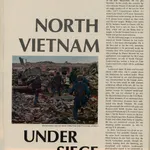
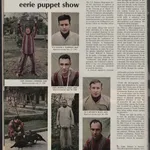
 Original Life Magazine April 7th, 1967
 Original Life Magazine April 7th, 1967
 Original Life Magazine April 7th, 1967.
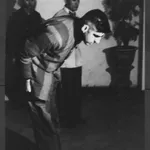
 “Bowing Under Watch — American Prisoner, Hanoi Press Conference, 1967.” (watermarks do not appear on the actual photograph.)
 “Bowing Under Watch — American Prisoner, Hanoi Press Conference, 1967.” (verso)
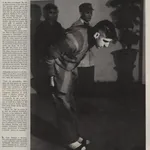
 Bowing American prisoner at Hanoi Press Conference. Life Magazine April 7th, 1967.
 Life Magazine April 7th, 1967.
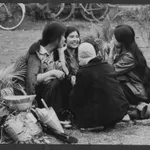
 Militia girls take a break during an exercise in Hanoi.
 Militia girls take a break during an exercise in Hanoi. (verso)
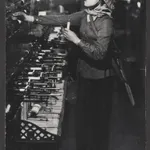
 A worker in Textile factory in the city of Nam Dinh. Nam Dinh, once Vietnam’s third largest city, has been almost completely evacuated because of recent bombings. This factory, the country’s second largest textile plant, has been largely evacuated into rural areas. In the small part of the factory still operating in the city, workers wear militia uniforms with rifles slung across their backs to be used against American aircraft in the event of the attack
 A worker in Textile factory in the city of Nam Dinh. Nam Dinh, once Vietnam’s third largest city, has been almost completely evacuated because of recent bombings. This factory, the country’s second largest textile plant, has been largely evacuated into rural areas. In the small part of the factory still operating in the city, workers wear militia uniforms with rifles slung across their backs to be used against American aircraft in the event of the attack (verso)
 “Factory Defense — Anti-Aircraft Gun, Haiphong, Vietnam, 1967.” (watermarks do not appear on the actual photograph.)
 A militia man manns anti-aircraft gun outside a factory in Haiphong. Gun is of American make and factory officials said it had been captured from the French at Dien Bien Phu. (verso)
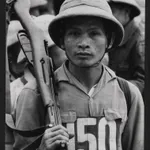
 A militia man during an exercise in Hanoi, Vietnam 1967. (watermarks do not appear on the actual photograph.)
 A militia man during an exercise in Hanoi. (verso)
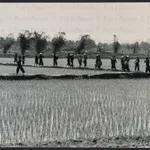
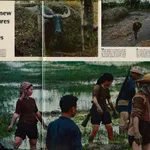
 Peasants in Thai Binh Province on their way to work in the rice fields after the lunch time siesta, North Vietnam 1967. (watermarks do not appear on the actual photograph.)
 Peasants in Thai Binh Province on their way to work in the rice fields after the lunch time siesta, North Vietnam 1967. (verso)
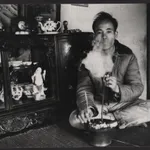
 Honor citizen of Nguyen Xa Cooperative Farm (Thai Binh Province) smokes a Vietnamese bamboo water pipe in his home. In cabinet to his right are a statue of Buddah and a bust of Joseph Stalin. (watermarks do not appear on the actual photograph.)
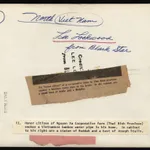
 Honor citizen of Nguyen Xa Cooperative Farm (Thai Binh Province) smokes a Vietnamese bamboo water pipe in his home. In cabinet to his right are a statue of Buddah and a bust of Joseph Stalin. (verso)
 Original Life Magazine April 7th, 1967
 Original Life Magazine April 7th, 1967
 Original Life Magazine April 7th, 1967
Lee Lockwood
16.5 x 24.6 cm
Further images
-
(View a larger image of thumbnail 1
)
-
(View a larger image of thumbnail 2
)
-
(View a larger image of thumbnail 3
)
-
(View a larger image of thumbnail 4
)

-
(View a larger image of thumbnail 5
)

-
(View a larger image of thumbnail 6
)
-
(View a larger image of thumbnail 7
)
-
(View a larger image of thumbnail 8
)

-
(View a larger image of thumbnail 9
)
-
(View a larger image of thumbnail 10
)
-
(View a larger image of thumbnail 11
)

-
(View a larger image of thumbnail 12
)
-
(View a larger image of thumbnail 13
)

-
(View a larger image of thumbnail 14
)
-
(View a larger image of thumbnail 15
)
-
(View a larger image of thumbnail 16
)
-
(View a larger image of thumbnail 17
)
-
(View a larger image of thumbnail 18
)
-
(View a larger image of thumbnail 19
)
-
(View a larger image of thumbnail 20
)
-
(View a larger image of thumbnail 21
)
-
(View a larger image of thumbnail 22
)
-
(View a larger image of thumbnail 23
)
-
(View a larger image of thumbnail 24
)
-
(View a larger image of thumbnail 25
)
-
(View a larger image of thumbnail 26
)
-
(View a larger image of thumbnail 27
)
-
(View a larger image of thumbnail 28
)
-
(View a larger image of thumbnail 29
)
-
(View a larger image of thumbnail 30
)
-
(View a larger image of thumbnail 31
)

-
(View a larger image of thumbnail 32
)




In one of the most controlled journalistic missions of the Vietnam War, Lee Lockwood—working through Black Star—
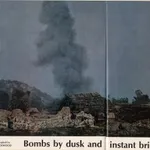
was granted rare access to North Vietnam.Lee Lockwood became the first Western photographer in more than a decade to be allowed inside North Vietnam.. Working under strict supervision, he spent 28 days documenting a country under constant bombardment. The result—“North Vietnam Under Siege”—appeared as the cover story of Life Magazine on April 7, 1967.
Yet within those limits, something extraordinary emerged: A society adapting to survive, A war fought not just by soldiers—but by everyone!
This collection brings together 11 original press photographs from that assignment - a rare, complete visual narrative of life inside a closed wartime society.
In 1967, at the height of the Vietnam War, Mr. Lockwood was the first outside photographer in more than a decade to be allowed into North Vietnam. The fruit of Mr. Lockwood’s 28-day visit, a long, heavily illustrated essay titled “North Vietnam Under Siege,” was published as the cover article of the April 7, 1967, edition of Life magazine. In words and photos, Mr. Lockwood portrayed the life of a country then under heavy bombardment by United States forces: bare, ruined villages; deserted factories; a boy with a missing leg, lost to a bomb. There were also calmer, quieter images of farmers, flower sellers and hemp dyers plying their trades. His most striking encounter, in Hanoi, was with Lt. Cmdr. Richard A. Stratton, an American Navy pilot who had been captured in January 1967. As Mr. Lockwood and other foreign newsmen listened, a man identifying himself as Commander Stratton read over a loudspeaker a long “confession” attacking United States involvement in the region.
Provenance
Lee LockwoodBlack Star
Past in Present.com Inc private historical archive.